

Efficient storage is the backbone of any successful warehouse operation. With the right industrial storage solutions, facilities can significantly enhance their operational efficiency.
Pallet racking systems are a crucial component in achieving this efficiency. By implementing these systems, warehouses can streamline their inventory management practices and optimize their storage capacity, leading to supercharged daily operations.
Key Takeaways
- Maximizes storage capacity in warehouses
- Enhances operational efficiency
- Streamlines inventory management practices
- Optimizes daily warehouse operations
- Improves overall warehouse organization
Understanding Pallet Racking Systems
Understanding the intricacies of pallet racking systems is vital for businesses aiming to optimize their warehouse operations. Pallet racking systems are designed to maximize storage capacity while ensuring that products are easily accessible.
What Are Pallet Racking Systems?
Pallet racking systems are storage solutions that enable warehouses to store palletized goods efficiently. These systems are customizable, allowing businesses to tailor their storage to meet specific needs.
The primary function of pallet racking is to make the most of a warehouse’s vertical space, thereby increasing storage capacity without the need for expansion. By utilizing pallet racking, warehouses can significantly enhance their operational efficiency.
Benefits of Using Pallet Racking
The benefits of using pallet racking systems are numerous. Some of the key advantages include:
- Increased storage capacity
- Improved accessibility to products
- Enhanced operational efficiency
- Customizable to meet specific business needs
By implementing a pallet racking system, businesses can experience a significant improvement in their overall warehouse management.
Different Types of Pallet Racking
There are several types of pallet racking systems available, each designed to cater to different warehouse needs. Some of the most common types include:
| Type of Racking | Description | Ideal Application |
|---|---|---|
| Selective Pallet Racks | Allows for direct access to any pallet | Warehouses requiring frequent access to a variety of products |
| Drive-In Pallet Racks | High-density storage for large quantities of the same product | Warehouses storing high volumes of similar items |
| Push-Back Pallet Racks | Last-In-First-Out (LIFO) storage system | Warehouses with products that are stored for extended periods |
By understanding the different types of pallet racking systems, businesses can make informed decisions about their storage needs, ultimately leading to more efficient warehouse operations.
Key Components of Pallet Racking Systems
The effectiveness of a pallet racking system depends on its core components, including uprights, beams, and decking. Understanding these elements is crucial for maximizing storage efficiency and ensuring the safe operation of your warehouse.
Uprights and Beams Explained
Uprights are the vertical columns that support the beams in a pallet racking system. They are typically made of steel and are designed to bear heavy loads. Beams, on the other hand, are the horizontal members that span between the uprights, providing the actual storage surface for pallets. The combination of uprights and beams forms the basic structure of a pallet racking system. For heavy-duty applications, it’s essential to choose heavy-duty racking components that can withstand the weight and stress of frequent use.
When selecting uprights and beams, consider factors such as material thickness, beam length, and the type of connector used. For instance, some systems use bolted connectors, while others use welded or snap-lock connectors. The choice of connector can affect the overall stability and adjustability of the racking system.
Decking Options Available
Decking refers to the material used to cover the beams, providing a surface for storing pallets. Common decking options include wire mesh, wood, and steel. Wire mesh decking is a popular choice because it allows for easy cleaning and provides good visibility and airflow. Wood decking, on the other hand, offers a more traditional look and can be used in conjunction with wire mesh for added support.
Steel decking is another option, known for its durability and strength. The choice of decking material depends on the specific needs of your warehouse, including the type of goods stored and the desired level of durability.
| Decking Material | Durability | Cost |
|---|---|---|
| Wire Mesh | High | Moderate |
| Wood | Medium | Low |
| Steel | Very High | High |
Safety Features to Consider
Safety is a critical consideration when it comes to pallet racking systems. One of the key safety features is the use of column protectors to prevent damage from forklifts. Additionally, many modern pallet racking systems incorporate safety features such as row end protectors and beam locks to prevent accidents.
For more information on selecting the right pallet racking system for your needs, visit Top Racks Direct, a leading provider of warehouse storage solutions.
Choosing the Right Pallet Racking Type
With various pallet racking options available, choosing the right one is essential for optimizing your warehouse’s layout and operations. When deciding on a pallet racking system, consider factors such as inventory volume, product characteristics, and warehouse layout.
Selective Racking vs. Drive-In Racking
Selective racking is ideal for warehouses that require flexible storage and frequent loading/unloading. It allows for easy access to any pallet, making it a popular choice for many warehouses. On the other hand, drive-in racking is suitable for high-density storage needs where the inventory is relatively stable and follows a Last-In-First-Out (LIFO) system.
| Features | Selective Racking | Drive-In Racking |
|---|---|---|
| Accessibility | High | Low |
| Storage Density | Medium | High |
| Inventory System | First-In-First-Out (FIFO) | Last-In-First-Out (LIFO) |
Heavy-Duty Pallet Racking
For warehouses dealing with heavy or bulky items, heavy-duty pallet racking is the way to go. These systems are designed to handle substantial weights and are often customizable pallet racks to fit specific load requirements. Ensuring that your racking system is robust and reliable is crucial for maintaining a safe working environment.
Cantilever Racking for Long Items
Cantilever racking is a specialized solution for storing long, awkward, or irregularly shaped items. It features arms that extend from a central column, providing easy access to items without the need for uprights. This type of racking is particularly useful for warehouses that store lumber, pipes, or other lengthy materials.
When choosing a pallet racking type, it’s essential to consider your specific warehouse needs, including the type of inventory, available space, and operational requirements. By selecting the right pallet racking system, you can enhance your warehouse’s efficiency, safety, and overall productivity.
Designing Your Warehouse Layout with Racking
Effective warehouse design is key to enhancing productivity and reducing costs. When it comes to designing your warehouse layout with racking, there are several factors to consider to maximize storage and efficiency.
Space Optimization Techniques
To optimize your warehouse space, consider using pallet rack accessories such as high-bay pallet racks to maximize vertical space. This allows for more efficient use of your warehouse’s cubic space, enabling you to store more inventory.
Some key space optimization techniques include:
- Utilizing narrow aisle racking to reduce aisle widths and increase storage density.
- Implementing a warehouse management system to track inventory and optimize storage locations.
- Using mezzanine floors or multi-level racking systems to add additional storage levels.
Workflow Efficiency Considerations
Improving workflow efficiency is crucial for reducing labor costs and enhancing productivity. When designing your warehouse layout, consider the flow of goods and personnel, and optimize your warehouse racking layout to facilitate easy access to frequently picked items.
Some workflow efficiency considerations include:
- Placing high-demand items in easily accessible locations to reduce picking times.
- Designating specific areas for receiving, storage, and shipping to streamline operations.
- Using technology such as barcode scanning and automated storage and retrieval systems (AS/RS) to improve inventory management.
Incorporating Accessibility in Design
Ensuring that your warehouse is accessible and safe for employees is vital. This includes designing your racking system with safety features such as row dividers, end stops, and column protectors to prevent accidents.
Some accessibility considerations include:
- Ensuring that aisles are wide enough for forklifts and personnel to navigate safely.
- Providing adequate lighting throughout the warehouse to improve visibility.
- Implementing safety training programs for employees to educate them on safe operating practices.
Safety Standards for Pallet Racking
The importance of safety standards in industrial storage solutions, particularly for pallet racking, cannot be overstated. Ensuring that pallet racking systems meet or exceed industry guidelines is crucial for protecting both employees and equipment in the warehouse.
OSHA Regulations Overview
The Occupational Safety and Health Administration (OSHA) sets forth specific regulations that warehouses must follow to ensure a safe working environment. For pallet racking systems, OSHA guidelines cover aspects such as installation, inspection, and maintenance. Compliance with these regulations is not just about avoiding fines; it’s about creating a culture of safety within the organization.
OSHA Regulations Overview
Some key OSHA regulations for pallet racking include:
- Ensuring that racking systems are designed and installed by qualified professionals.
- Regular inspections to identify and address any damage or wear.
- Proper training for employees on the safe use of pallet racking systems.
Importance of Regular Inspections
Regular inspections are a critical component of maintaining a safe warehouse environment. By identifying and addressing potential issues before they become major problems, warehouses can prevent accidents and ensure continuous operation.
“Regular inspections are not just a regulatory requirement; they are an essential part of a proactive safety strategy.”
Some best practices for regular inspections include:
- Conducting inspections on a regular schedule, such as monthly or quarterly.
- Training inspection personnel to identify signs of wear or damage.
- Maintaining detailed records of inspections and any corrective actions taken.
Training Employees on Safety
Training employees on the safe use of pallet racking systems is vital. This includes educating them on how to properly load and unload pallets, navigate the warehouse, and respond in case of an emergency.
Effective training programs should be comprehensive and ongoing, with regular refreshers to ensure that employees remain knowledgeable about safety procedures.
Maintenance Best Practices for Pallet Racking
Maintaining your pallet racking system is essential for both efficiency and safety in your warehouse. Regular maintenance not only prolongs the lifespan of your pallet storage racks but also ensures that your operations run smoothly without interruptions.
One of the critical aspects of maintaining heavy-duty racking systems is regular cleaning and inspections. Monthly visual inspections can help identify potential issues before they become major problems. During these inspections, look for signs of damage, wear, and tear, such as bent beams or loose bolts.
Regular Cleaning and Inspections
To keep your pallet racking in optimal condition, it’s crucial to:
- Clean the racks regularly to prevent dust and debris buildup.
- Inspect all components, including uprights, beams, and decking, for any signs of damage.
- Check for and tighten any loose bolts or screws.
Regular inspections can help in early detection of potential hazards, ensuring a safer working environment.
Repairing and Replacing Components
When inspecting your pallet racking, if you find any damaged components, it’s essential to repair or replace them promptly. Here’s a simple guide to help you:
| Component | Inspection Criteria | Action Required |
|---|---|---|
| Uprights | Check for bends, dents, or rust. | Replace if damaged beyond repair. |
| Beams | Inspect for bends or signs of overload. | Repair or replace as necessary. |
| Decking | Look for cracks or broken slats. | Replace damaged slats to ensure stability. |
Avoiding Common Mistakes
One of the most common mistakes in maintaining pallet racking is neglecting regular inspections. Another mistake is overloading the racks beyond their capacity. To avoid these pitfalls, ensure that:
- You adhere to the manufacturer’s guidelines for load capacity.
- Training is provided to employees on the proper use and loading of pallet racks.
By following these best practices, you can significantly enhance the safety and efficiency of your warehouse operations. Remember, a well-maintained heavy-duty racking system is key to a productive and safe working environment.
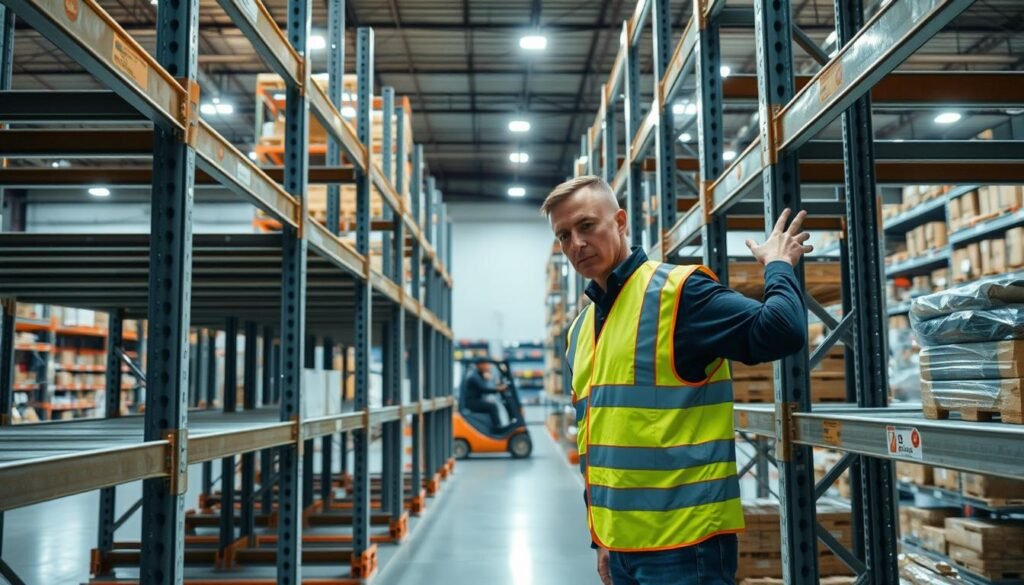
Tips for Maximizing Storage Capacity
To optimize warehouse space, it’s essential to consider several key strategies. Maximizing storage capacity requires careful consideration of vertical space utilization, aisle width, and inventory management practices. By implementing the right pallet racking systems, businesses can significantly enhance their storage capabilities.
Vertical Space Utilization
One of the most effective ways to maximize storage capacity is by utilizing vertical space. Customizable pallet racks can be designed to fit the specific needs of a warehouse, allowing for maximum use of vertical space. This approach not only increases storage capacity but also improves accessibility to stored items.
Using Narrow Aisle Racking
Narrow aisle racking is another strategy for maximizing storage capacity. By reducing the width of aisles, warehouses can fit more storage racks, thus increasing overall storage capacity. This method requires careful planning to ensure that the narrower aisles do not hinder the movement of forklifts and other equipment.
Implementing FIFO and LIFO Systems
Inventory management practices such as First-In-First-Out (FIFO) and Last-In-First-Out (LIFO) systems play a crucial role in maximizing storage efficiency. FIFO ensures that older stock is sold or used before newer stock, reducing the risk of inventory becoming obsolete. LIFO, on the other hand, is useful for products that do not have a limited shelf life. Implementing these systems effectively can significantly improve storage efficiency.
“The key to maximizing storage capacity lies in understanding the specific needs of your warehouse and implementing the right strategies to meet those needs.” – Warehouse Efficiency Expert
By combining these strategies—utilizing vertical space, using narrow aisle racking, and implementing effective inventory management systems—warehouses can achieve significant improvements in storage capacity and overall operational efficiency.
Technological Advances in Pallet Racking Systems
Modern warehouses are leveraging technological advances in pallet racking systems to enhance efficiency and accuracy. The integration of technology in pallet racking is revolutionizing the way warehouses operate, making it easier to manage inventory and streamline operations.
Automated Racking Solutions
Automated racking solutions are at the forefront of technological advancements in pallet racking. These systems utilize robotics and artificial intelligence to optimize storage and retrieval processes. By incorporating automated storage and retrieval systems (AS/RS), warehouses can significantly reduce labor costs and improve inventory management.
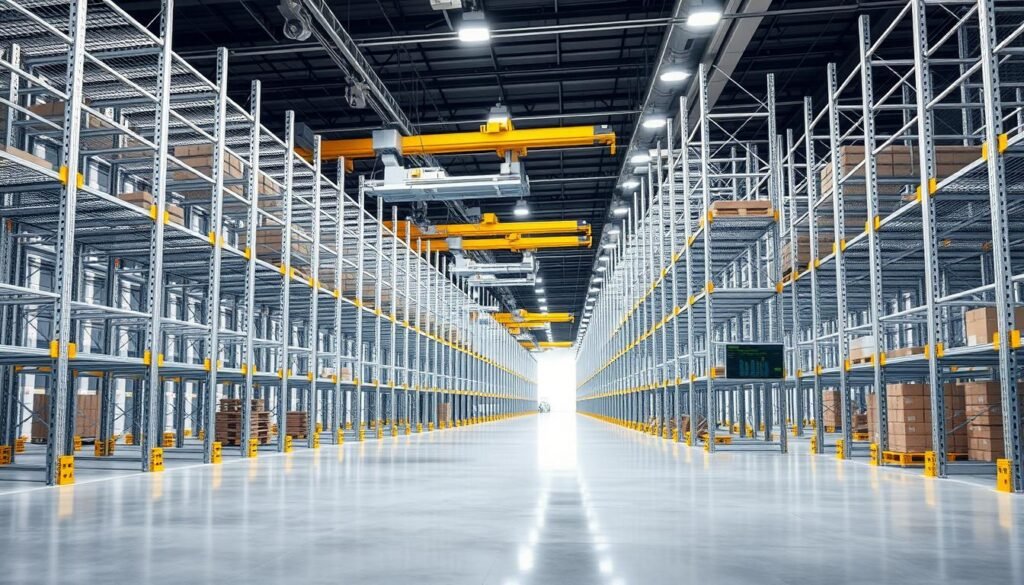
Integration with Warehouse Management Systems
The integration of pallet racking systems with Warehouse Management Systems (WMS) is another significant technological advancement. This integration enables real-time tracking of inventory, improves order fulfillment accuracy, and enhances overall warehouse efficiency. By leveraging WMS, warehouses can optimize their storage capacity and streamline their operations.
Future Trends to Watch
As technology continues to evolve, several future trends are expected to shape the pallet racking industry. These include the adoption of Internet of Things (IoT) devices, the use of big data analytics to optimize warehouse operations, and the development of more sophisticated AS/RS. Staying abreast of these trends will be crucial for warehouses looking to remain competitive.
By embracing these technological advances, warehouses can improve their operational efficiency, reduce costs, and enhance their overall competitiveness in the market.
Finding the Right Supplier for Your Needs
Selecting the right supplier for your pallet racking systems is crucial to ensure you receive high-quality industrial storage solutions that meet your specific needs. A reliable supplier can provide expert guidance on shelving systems and pallet rack installation, helping you maximize your storage capacity.
Key Considerations
When evaluating potential suppliers, consider their product quality, customer support, and experience in pallet rack installation. Look for suppliers who offer customized solutions and have a proven track record in delivering industrial storage solutions.
Asking the Right Questions
Before making a purchase, ask potential suppliers about their certifications, warranty offered, and after-sales support. This will help you gauge their reliability and commitment to customer satisfaction.
Comparing Costs and Quality
Compare the costs and quality of pallet racking systems from different suppliers to ensure you get the best value for your investment. Consider factors such as material durability, design flexibility, and compliance with safety standards.