

Optimizing storage space is crucial for efficient warehouse operations. Studies show that poor racking can steal up to 20% of usable cubes in North American warehouses, highlighting the need for effective storage solutions.
Choosing the right heavy duty storage solutions can make a significant difference. The ideal industrial warehouse racks should offer durability, adjustability, and cost-effectiveness, ultimately enhancing warehouse efficiency.
With various options available, understanding the different types of racks and their benefits is essential. In this article, we’ll explore the best options for your needs.
Key Takeaways
- Poor racking can waste up to 20% of warehouse space.
- Durability is a key factor in choosing warehouse racks.
- Adjustability is crucial for optimizing storage.
- Cost-effectiveness is essential for warehouse efficiency.
- Understanding different types of racks is vital.
Understanding Industrial Warehouse Racks
Understanding the nuances of industrial warehouse racks is crucial for optimizing warehouse space and improving inventory management. Industrial warehouse racks are designed to store and organize inventory efficiently, playing a vital role in the logistics and supply chain management of businesses.
What Are Industrial Warehouse Racks?
Industrial warehouse racks are metal structures designed to support goods in a warehouse or industrial facility. They are engineered to maximize storage capacity while ensuring easy access to stored items. These racks are customizable to fit various warehouse layouts and can be adjusted according to the specific needs of the business.
Industrial racking systems, including pallet racking systems and industrial shelving units, are made from durable materials such as steel or aluminum, ensuring they can withstand the rigors of daily use in a busy warehouse environment.
Types of Industrial Warehouse Racks
There are various types of industrial warehouse racks, each designed to serve specific storage needs. The most common types include:
- Selective pallet racks
- Drive-in racks
- Push-back racks
- Cantilever racks
Each type of rack has its unique features and benefits. For instance, selective pallet racks offer easy access to pallets, while drive-in racks maximize storage density by allowing forklifts to drive into the rack structure.
| Type of Rack | Description | Benefits |
|---|---|---|
| Selective Pallet Racks | Allows for direct access to each pallet | Ease of access, flexibility |
| Drive-In Racks | Forklifts drive into the rack to store or retrieve pallets | High storage density, efficient use of space |
| Push-Back Racks | Pallets are pushed back to store multiple pallets deep | High storage capacity, LIFO (Last-In-First-Out) inventory system |
| Cantilever Racks | Arms extend out to hold long or irregularly shaped items | Ideal for storing long or bulky items, easy access |
Understanding these different types of industrial warehouse racks is essential for businesses to choose the most appropriate racking system that meets their specific storage needs and enhances their warehouse operations.
Benefits of Using Industrial Warehouse Racks
Industrial warehouse racks are a game-changer for businesses looking to optimize their storage solutions. By maximizing vertical space and providing easy access to inventory, these racks can significantly improve warehouse efficiency.
Improved Space Utilization
One of the primary benefits of industrial warehouse racks is their ability to maximize storage space. By utilizing vertical space, businesses can store more inventory without expanding their warehouse footprint. This is particularly beneficial for companies with limited floor space, as it allows them to make the most of their existing area.
Efficient use of vertical space is a hallmark of well-designed warehouse racking systems. By stacking inventory higher, businesses can reduce clutter and improve overall warehouse organization.
Enhanced Organization and Accessibility
Industrial warehouse racks also enhance organization and accessibility within the warehouse. With a well-organized racking system, employees can quickly locate and retrieve inventory, reducing the time spent on inventory management and improving overall productivity.
Moreover, commercial storage racks can be customized to fit specific business needs, including adjustable shelving options that allow for flexibility as inventory needs change. This adaptability ensures that the racking system remains effective over time.
- Improved inventory management
- Reduced clutter and improved safety
- Enhanced accessibility to inventory
- Flexibility to adapt to changing inventory needs
By investing in industrial warehouse racks, businesses can create a more efficient, organized, and productive warehouse environment. Whether you’re looking to maximize storage space or improve inventory management, the right racking system can make a significant difference.
Key Features to Consider
To maximize the potential of your warehouse, it’s essential to focus on the key features of your industrial racks. The design of storage systems from industrial racking is the result of major engineering research and innovation efforts, leading to solutions that are both efficient and reliable.
Load Capacity and Durability
One of the primary considerations when selecting heavy duty storage solutions is the load capacity and durability of the racks. You need to ensure that the racks can support the weight of your inventory without compromising on safety. “A well-designed racking system can significantly reduce the risk of accidents and damage to goods,” as emphasized by industry experts.
The durability of the racks is also crucial, as it directly impacts their lifespan and maintenance needs. High-quality materials and construction methods contribute to racks that can withstand the rigors of a busy warehouse environment.
Material Choices: Steel vs. Aluminum
The choice between steel and aluminum for your metal storage racks depends on several factors, including the type of inventory, the warehouse environment, and budget considerations. Steel is known for its strength and durability, making it suitable for heavy-duty applications.
Aluminum, on the other hand, offers a lighter and corrosion-resistant alternative, which can be advantageous in certain contexts. However, it may not provide the same level of strength as steel.
“The right material choice can enhance the efficiency and safety of your warehouse operations.”
- Steel racks are ideal for heavy loads and harsh environments.
- Aluminum racks offer a corrosion-resistant and lighter option.
Popular Types of Industrial Warehouse Racks
Pallet racking systems are a crucial component of modern warehouses, offering various configurations to suit different needs. The right choice of warehouse pallet racks can significantly enhance storage efficiency, safety, and accessibility within the facility.
Selective Pallet Racks
Selective pallet racks are one of the most common types of pallet racking systems. They offer flexibility and direct access to any pallet, making them highly versatile for warehouses with diverse inventory. These racks are ideal for operations that require frequent access to a wide range of products.
Drive-In Racks
Drive-in racks are designed for high-density storage, where pallets are stored in a deep-lane configuration. This system is perfect for storing large quantities of the same product, maximizing storage capacity, and reducing the need for multiple aisles.
Push Back Racks
Push back racks are another form of high-density storage solution. They allow for multiple pallets to be stored on each level, with the ability to push back pallets to retrieve the next one. This system is beneficial for reducing aisle space while maintaining a high level of inventory.
Cantilever Racks
Cantilever racks are specifically designed for storing long, heavy, or bulky items such as lumber, pipes, or furniture. They feature arms that extend from a central column, providing unobstructed storage for items of varying lengths.
| Type of Rack | Description | Best For |
|---|---|---|
| Selective Pallet Racks | Direct access to any pallet | Diverse inventory, frequent access |
| Drive-In Racks | High-density storage, deep-lane configuration | Large quantities of the same product |
| Push Back Racks | Multiple pallets per level, push back mechanism | Reducing aisle space, high inventory |
| Cantilever Racks | Arms extending from a central column | Long, heavy, or bulky items |
Choosing the Right Size and Configuration
To optimize your warehouse’s storage potential, it’s essential to choose the right size and configuration for your industrial warehouse racks. This decision significantly impacts your warehouse’s efficiency and productivity.
Measuring Your Space is a critical step in determining the optimal rack configuration. Begin by assessing the total available space in your warehouse, including the height, width, and length of the area where you plan to install the racks.
Measuring Your Space
Accurate measurements are vital. Consider the location of doors, windows, and any other obstacles that could affect the placement of your racks. It’s also important to think about the workflow and traffic patterns within your warehouse to ensure that your rack configuration complements these factors.
Here’s a simple table to help you plan your warehouse space:
| Dimension | Measurement | Notes |
|---|---|---|
| Warehouse Width | 100 feet | Available width for rack placement |
| Warehouse Length | 200 feet | Total length for rack rows |
| Aisle Width | 10 feet | Minimum required for forklift operation |
Considering Aisle Width
Aisle width is another crucial factor. Very Narrow Aisle (VNA) Pallet Racking, for example, is a compact version of adjustable pallet racking that creates a higher density and capacity storage system. The width of your aisles will depend on the type of equipment used to access the racks, such as forklifts or pallet jacks.
Narrow aisles can increase storage capacity but may require specialized equipment. It’s essential to balance storage density with accessibility and safety.
By carefully measuring your space and considering factors like aisle width, you can determine the most suitable rack configuration for your industrial warehouse shelving needs, ultimately enhancing your warehouse organization solutions.
Safety Considerations with Warehouse Racks
When it comes to warehouse safety, the integrity of your storage racks is paramount. Ensuring that your commercial storage racks and industrial shelving units are in good condition is crucial for preventing accidents and maintaining a safe working environment.
Regular Inspections and Maintenance
Regular inspections are vital to identify any potential issues with your warehouse racks before they become major problems. This includes checking for signs of wear and tear, damage from forklift impacts, and ensuring that all components are securely in place.
Maintenance should be performed promptly when any issues are identified. This can involve repairing or replacing damaged parts, tightening loose fittings, and ensuring that the racks are properly aligned.
Compliance with Safety Standards
Compliance with safety standards is not just about avoiding legal issues; it’s about ensuring the well-being of your employees. Familiarize yourself with local and national regulations regarding warehouse rack safety, such as those related to load capacity and rack installation.
| Safety Standard | Description | Importance |
|---|---|---|
| Load Capacity | Ensuring that racks are not overloaded beyond their capacity. | High |
| Rack Installation | Proper installation of racks according to manufacturer guidelines. | High |
| Regular Inspections | Regular checks to identify and address potential safety issues. | Medium |
By prioritizing the safety of your warehouse racks, you not only protect your employees but also reduce the risk of costly accidents and downtime. Remember, safety is an ongoing process that requires continuous attention and maintenance.

Customizing Your Warehouse Racking System
A tailored warehouse racking system can significantly enhance your operational productivity. By customizing your industrial warehouse shelving, you can ensure that your storage solutions meet your specific business needs.
Adjustable Shelving Options
One of the key benefits of customizing your warehouse racking system is the ability to incorporate adjustable shelving options. This flexibility allows you to adapt your storage solutions as your inventory needs change. Adjustable shelving units can be easily reconfigured to accommodate different types of products, ensuring that your warehouse remains organized and efficient.
Integrating Technology for Inventory Management
In addition to physical shelving adjustments, integrating technology into your warehouse racking system can further enhance your warehouse organization solutions. Technologies such as barcode scanning, RFID tracking, and warehouse management software can streamline your inventory management processes, reducing errors and increasing productivity.
By combining adjustable shelving with advanced inventory management technology, you can create a highly efficient and effective warehouse operation. This integrated approach not only improves your current operations but also provides a scalable solution for future growth.
Cost Factors for Industrial Warehouse Racks
To make an informed decision about industrial warehouse racks, businesses must first understand the factors that affect their cost. The primary cost factors include the type of rack, material used, size, and additional features such as customization options.
Budgeting for Purchase and Installation
When budgeting for industrial warehouse racks, it’s crucial to consider both the initial purchase cost and the cost of installation. The purchase cost can vary widely depending on whether you opt for heavy duty storage solutions or more lightweight options. For instance, metal storage racks are a popular choice due to their durability and versatility.
The average cost of a cantilever rack per bay typically ranges from $500 to $1,000 for light-duty applications. However, costs can escalate for heavy-duty or customized solutions. It’s also important to factor in the cost of installation, which can vary depending on the complexity of the rack system and whether you hire professionals or opt for a DIY approach.
| Type of Rack | Average Cost per Bay | Installation Cost |
|---|---|---|
| Cantilever Rack (Light-Duty) | $500 – $1,000 | $200 – $500 |
| Selective Pallet Rack | $300 – $800 | $150 – $300 |
| Drive-In Rack | $1,000 – $2,500 | $500 – $1,000 |
Long-term Cost Savings
While the initial cost of industrial warehouse racks can be significant, they offer substantial long-term cost savings. By maximizing storage capacity and improving inventory management, businesses can reduce labor costs and minimize the risk of product damage.
Efficient storage solutions like metal storage racks can also help businesses make the most of their available space, potentially delaying or eliminating the need for costly warehouse expansions. Furthermore, a well-organized warehouse can improve operational efficiency, leading to faster order fulfillment and improved customer satisfaction.
In conclusion, understanding the cost factors associated with industrial warehouse racks is essential for making informed decisions that align with your business needs and budget. By considering both the initial costs and the long-term benefits, businesses can maximize their investment in heavy duty storage solutions.
Best Practices for Installing Warehouse Racks
Properly installing warehouse racks is essential for maximizing storage capacity and maintaining a safe working environment. The process involves several critical steps that must be carefully planned and executed.
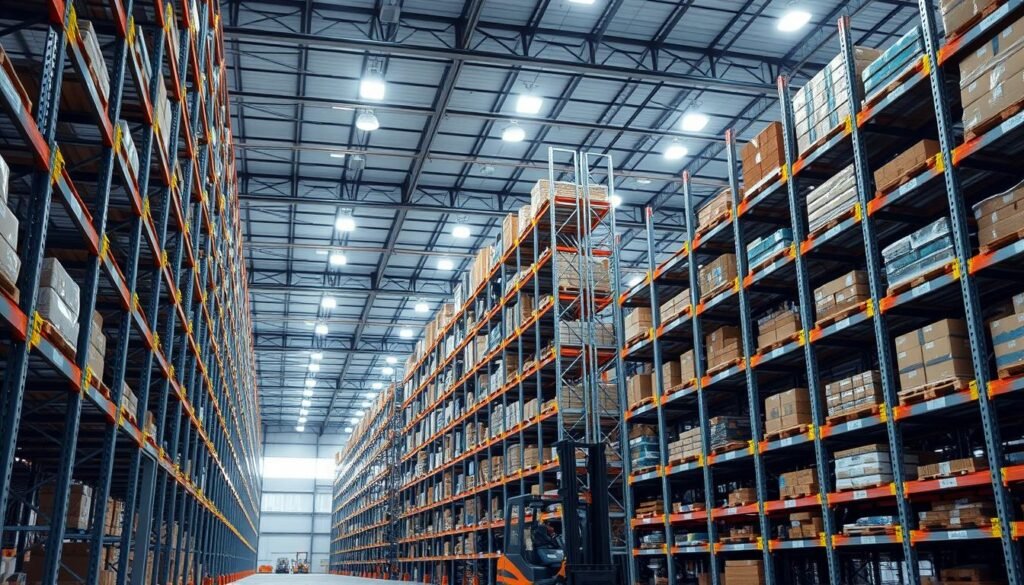
Professional Installation vs. DIY
When it comes to installing industrial shelving units and warehouse pallet racks, one of the key decisions is whether to opt for professional installation or to undertake the task as a DIY project. Professional installation offers several advantages, including:
- Expertise: Professionals have the experience and knowledge to install racking systems correctly and efficiently.
- Safety: They are trained to handle the equipment and materials safely, reducing the risk of accidents.
- Warranty: Many manufacturers require professional installation to honor the warranty.
On the other hand, DIY installation can be cost-effective for smaller projects. However, it’s crucial to have a thorough understanding of the installation process and to follow the manufacturer’s instructions carefully.
Planning for Future Expansion
Another important aspect of installing warehouse pallet racks is planning for future expansion. This involves considering not just your current storage needs but also potential future requirements. Key considerations include:
- Assessing the available space and how it can be utilized more effectively.
- Choosing a racking system that is flexible and can be easily expanded or reconfigured.
- Ensuring that the installed system complies with current safety standards and can accommodate future changes in inventory or storage needs.
By carefully planning the installation of your industrial shelving units and considering both current and future needs, you can create a storage system that is efficient, safe, and adaptable.
Maintaining Your Racking System
The longevity and safety of your industrial warehouse shelving depend heavily on a well-planned maintenance routine. Regular maintenance not only extends the life of your commercial storage racks but also ensures a safe working environment for your employees.
Regular Maintenance Checklist
To maintain your racking system effectively, follow this checklist:
- Inspect racks for damage or wear
- Check for proper alignment and stability
- Tighten any loose bolts or screws
- Ensure load capacities are not exceeded
- Keep the area around racks clear of debris
Regular inspections should be conducted at least once a month, with more frequent checks during periods of high usage.
Signs of Wear and When to Replace
Identifying signs of wear early can prevent accidents and reduce downtime. Common signs include:
- Bent or damaged frame components
- Loose or missing bolts and screws
- Signs of rust or corrosion on metal parts
- Unexplained changes in rack alignment
| Sign of Wear | Recommended Action |
|---|---|
| Bent frame components | Replace damaged parts immediately |
| Loose bolts and screws | Tighten or replace as necessary |
| Rust or corrosion | Treat or replace affected parts |
By following these guidelines and staying vigilant about the condition of your industrial warehouse shelving, you can ensure a safe and efficient warehouse operation.
Where to Purchase Quality Warehouse Racks
Purchasing the right industrial warehouse racks requires careful consideration of suppliers. With numerous options available, understanding the benefits of different sources can help you make an informed decision.
When it comes to sourcing warehouse organization solutions, you have several choices. The two primary options are online retailers and local suppliers, each with its unique advantages.
Online Retailers
Online retailers offer a convenient way to browse and purchase warehouse racks. Some benefits of buying online include:
- Wide selection of products
- Competitive pricing
- Customer reviews to help with decision-making
Popular online retailers for industrial warehouse racks include specialized industrial supply stores and large e-commerce platforms. When purchasing online, ensure that you check the product specifications, customer reviews, and return policies.
Local Suppliers
Local suppliers provide an alternative to online shopping, offering the advantage of personalized service and the ability to inspect products before purchase. Some benefits of buying from local suppliers include:
- Immediate assistance with queries and support
- Opportunity to inspect the product before buying
- Potential for customized solutions tailored to your needs
When selecting a local supplier, consider their reputation, the quality of their products, and their ability to provide after-sales support. Visiting their showroom or consulting with their representatives can give you a better understanding of their offerings.
In conclusion, both online retailers and local suppliers can provide quality warehouse organization solutions. By weighing the pros and cons of each option, you can make a decision that best suits your business needs.
Conclusion: Finding Your Ideal Industrial Warehouse Rack
Carefully choosing the right pallet racking system for your warehouse needs is crucial for optimizing storage space and improving operational efficiency. By understanding the different types of industrial warehouse racks, including heavy duty storage solutions, you can make an informed decision that meets your specific requirements.
Key Takeaways
When selecting a pallet racking system, consider factors such as load capacity, material durability, and accessibility. Ensure that your chosen system is adaptable to your unique inventory needs and provides safe storage for your employees.
For more information on pallet racking systems and to explore options for your warehouse, visit Top Racksdirect. Their expertise in providing high-quality storage solutions can help you optimize your warehouse’s potential.
Next Steps
Now that you have a better understanding of industrial warehouse racks, start evaluating your current storage setup. Consider consulting with a professional to assess your needs and recommend the best heavy duty storage solutions for your business.