

Efficient storage is the backbone of any successful warehouse operation. When it comes to storage solutions, it’s not a simple “one size fits all” approach. A well-organized storage system can make a significant difference in productivity and profitability.
A warehouse should be able to adapt to specific needs, equipment, and other factors. By implementing the right storage solutions, businesses can maximize their storage capacity, reduce costs, and improve overall efficiency.
Key Takeaways
- Efficient storage is crucial for warehouse operations.
- A well-organized storage system improves productivity and profitability.
- Adaptable storage solutions cater to specific warehouse needs.
- Maximizing storage capacity reduces costs and improves efficiency.
- Industrial storage solutions are designed to meet specific business requirements.
Understanding Commercial Warehouse Shelving
Commercial warehouse shelving is a fundamental component of a well-organized warehouse, enhancing storage capacity and accessibility. Effective shelving solutions are crucial for businesses to manage their inventory efficiently and maintain a safe working environment.
What is Commercial Warehouse Shelving?
Commercial warehouse shelving refers to multiple industrial storage solutions, including pallet racks, push backs, cantilever, drive-in/drive-thru, and flow-thru racks. These shelving systems are designed to store products and materials in a way that maximizes space and facilitates easy access.
Benefits of Using Warehouse Shelving
The benefits of using warehouse shelving are numerous. Some of the key advantages include:
- Improved Organization: Shelving helps in categorizing and storing products in an orderly manner, making it easier to locate items when needed.
- Enhanced Accessibility: By storing items at appropriate heights and in accessible locations, shelving improves the overall accessibility of products within the warehouse.
- Increased Storage Capacity: Efficient shelving systems enable warehouses to make the most of their available space, thereby increasing storage capacity.
| Shelving Type | Weight Capacity | Space Efficiency | Ease of Assembly |
|---|---|---|---|
| Pallet Racking | High | High | Moderate |
| Cantilever Racks | High | Moderate | Moderate |
| Drive-In/Drive-Thru Racks | High | High | Complex |
By understanding the different types of commercial warehouse shelving and their benefits, businesses can make informed decisions to optimize their warehouse operations.
Types of Commercial Warehouse Shelving
Warehouse shelving comes in multiple forms, each designed for specific storage needs. The choice of shelving can significantly impact the efficiency and productivity of a warehouse operation.
Boltless Shelving
Boltless shelving is a popular choice for warehouses due to its ease of assembly and flexibility. It is ideal for storing lighter items and can be easily reconfigured as storage needs change.
Pallet Racking
Pallet racking systems are designed for heavier loads and are typically used for storing palletized goods. They come in various configurations, including selective, drive-in, and push-back racking.
Cantilever Racks
Cantilever racks are used for storing long, heavy, or irregularly shaped items. They feature arms that extend from a central column, providing easy access to stored items.
Mobile Shelving
Mobile shelving systems are designed to maximize storage density by eliminating the need for aisles between shelving units. They are ideal for warehouses where space is limited.
| Type of Shelving | Description | Best Use |
|---|---|---|
| Boltless Shelving | Easy to assemble, flexible | Lighter items, frequent reconfiguration |
| Pallet Racking | Heavy-duty, various configurations | Palletized goods, high storage capacity |
| Cantilever Racks | Long, heavy, or irregular items | Timber, pipes, or long machinery |
| Mobile Shelving | Space-saving, high-density storage | Warehouses with limited space |
Factors to Consider When Choosing Shelving
To ensure efficient warehouse operations, it’s vital to consider several key factors when selecting shelving. The right warehouse storage solutions can significantly enhance your operational efficiency and storage capacity.
Weight Capacity
One of the most critical factors is the weight capacity of the shelving units. It’s essential to assess the types of items you will be storing and ensure that the shelving can support the total weight. Overloading shelving can lead to structural failures and accidents.
- Evaluate the maximum weight your shelving will need to hold.
- Choose shelving materials and designs that offer the necessary strength.
- Consider adjustable shelving to accommodate items of varying sizes and weights.
Space Efficiency
Maximizing space efficiency is crucial in warehouse management. The shelving you choose should optimize your available space without compromising accessibility. Consider commercial storage racks that are designed to make the most of your warehouse’s dimensions.
- Assess your warehouse layout to determine the best shelving configuration.
- Utilize vertical space by selecting taller shelving units.
- Implement a shelving system that allows for easy navigation and access to stored items.
Ease of Assembly
The ease of assembly and installation of your shelving system is another important consideration. Shelving that is straightforward to assemble can save time and reduce labor costs. Look for systems with clear instructions and minimal complexity.
By carefully evaluating these factors, you can select a shelving system that meets your warehouse’s specific needs, enhancing both efficiency and safety.
Advantages of Commercial Warehouse Shelving
Warehouse shelving racks play a crucial role in streamlining industrial storage solutions, making them an essential component of modern warehouses. By implementing effective shelving systems, businesses can significantly enhance their operational efficiency.
Improved Organization
One of the primary advantages of commercial warehouse shelving is improved organization. With a well-structured shelving system, warehouses can categorize and store products in a manner that makes them easily accessible. This not only saves time but also reduces the likelihood of inventory errors.
Enhanced Accessibility
Commercial warehouse shelving enhances accessibility by ensuring that products are stored at appropriate heights and locations, making it easier for staff to retrieve and store items. This accessibility is crucial for maintaining a smooth workflow and meeting customer demands promptly.
Increased Storage Capacity
Another significant benefit is the increased storage capacity that commercial shelving provides. By maximizing vertical space and optimizing storage layouts, warehouses can accommodate more inventory without expanding their footprint. This is particularly beneficial for businesses looking to grow their operations without incurring additional costs for larger facilities.
In conclusion, the advantages of commercial warehouse shelving are clear. From improved organization and enhanced accessibility to increased storage capacity, these shelving systems are vital for businesses seeking to optimize their warehouse operations and improve overall efficiency.
Customization Options for Shelving
Tailoring your commercial shelving to your specific needs can improve overall warehouse productivity. Customization allows businesses to optimize their storage solutions, making the most of their warehouse space.
Size and Dimensions
One of the primary aspects of customizing your shelving is determining the right size and dimensions. Commercial shelving units can be tailored to fit your warehouse’s specific layout, ensuring maximum storage capacity.
When considering size, it’s essential to measure your warehouse space accurately and think about the types of items you need to store. This will help you decide on the optimal shelving configuration.
Material Choices
The material of your shelving is another critical factor. Different materials offer varying levels of durability and aesthetic appeal. For instance, steel shelving is known for its strength and durability, making it ideal for heavy-duty storage needs.
Color and Finish
The color and finish of your shelving can also be customized to match your warehouse’s aesthetic or brand identity. This not only enhances the visual appeal of your workspace but can also contribute to a more organized and efficient working environment.
| Customization Aspect | Options | Benefits |
|---|---|---|
| Size and Dimensions | Various configurations | Maximizes storage capacity |
| Material Choices | Steel, wood, etc. | Durability, aesthetic appeal |
| Color and Finish | Multiple colors and finishes | Enhances visual appeal, brand identity |
By considering these customization options, businesses can create warehouse storage solutions that are tailored to their specific operational needs, enhancing overall efficiency and productivity.
Safety Features in Warehouse Shelving
The importance of safety features in commercial warehouse shelving cannot be overstated, as they directly impact the well-being of employees and the efficiency of operations. Safety features such as load limit indicators, stability, and durability are crucial in warehouse shelving.
Load Limit Indicators
Load limit indicators are a critical safety feature that helps prevent overloading of shelves, which can lead to collapses and accidents. These indicators clearly mark the maximum weight capacity of each shelf, ensuring that warehouse staff are aware of the limits.
Stability and Durability
The stability and durability of warehouse shelving are fundamental to maintaining a safe working environment. Heavy-duty warehouse shelves are designed to withstand the rigors of frequent use and heavy loads, reducing the risk of accidents.
To ensure stability, shelving units should be properly anchored to the floor and configured to distribute weight evenly. Regular checks should be performed to identify any signs of wear or damage that could compromise the structure.
Regular Maintenance
Regular maintenance is essential to ensure the continued safety and efficiency of warehouse racking systems. This includes routine inspections to identify and address any potential issues before they become major problems.
A well-maintained shelving system not only enhances safety but also prolongs the lifespan of the equipment, providing a better return on investment.
| Safety Feature | Description | Benefit |
|---|---|---|
| Load Limit Indicators | Clearly marks the maximum weight capacity | Prevents overloading and potential collapses |
| Stability and Durability | Ensures shelving can withstand heavy use | Reduces risk of accidents and prolongs equipment life |
| Regular Maintenance | Includes routine inspections and repairs | Ensures continued safety and efficiency |
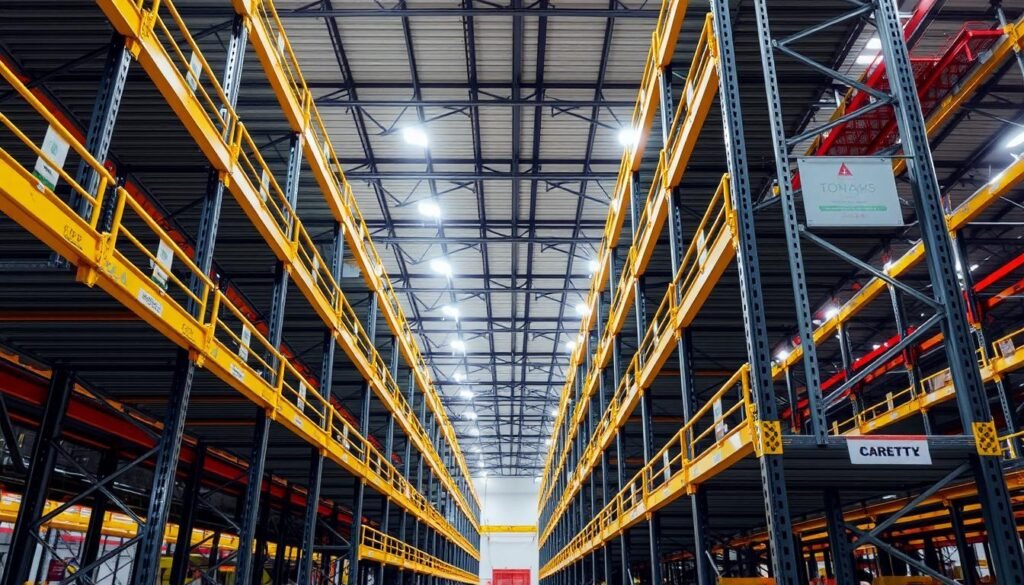
Installation Process for Shelving
Properly installing warehouse shelving systems is essential for maximizing storage efficiency and ensuring workplace safety. The installation process involves several key steps that must be carefully executed to achieve the desired outcomes.
Pre-Installation Planning
Before the actual installation begins, thorough planning is necessary. This includes assessing the warehouse space, determining the type of shelving needed, and ensuring that all necessary components are available. Pre-installation planning helps in avoiding costly delays and ensures that the shelving system meets the specific needs of the warehouse.
It’s also crucial to consider the floor condition and ensure it’s level and capable of supporting the weight of the shelving and its contents. This step is vital for the stability and safety of the shelving system.
Professional Installation vs. DIY
One of the critical decisions during the installation process is whether to opt for professional installation or to undertake it as a DIY project. Professional installation offers the advantage of expertise and can ensure that the shelving is installed correctly and safely. On the other hand, DIY installation can be cost-effective but requires a good understanding of the installation process and the necessary safety precautions.
- Professional installation ensures expertise and safety.
- DIY installation can be cost-effective but requires careful planning.
Post-Installation Inspection
After the shelving has been installed, a thorough inspection is necessary to ensure that it is safe and functional. This involves checking the stability of the shelving, ensuring that all components are securely in place, and verifying that the shelving can support the intended loads. A post-installation inspection is crucial for identifying any potential issues early on.
Regular inspections after the initial installation can also help in maintaining the integrity of the shelving system over time.
Cost Considerations for Warehouse Shelving
Warehouse shelving costs encompass various factors that businesses must consider to optimize their storage solutions. When evaluating warehouse storage solutions, it’s essential to understand the financial implications of different shelving options.
Initial Investment
The initial investment in commercial storage racks can be substantial, involving costs such as purchasing the shelving units, installation, and any necessary accessories. Businesses should assess their storage needs carefully to avoid over-investing in shelving that may not be fully utilized.
Long-term Savings
While the initial cost of warehouse shelving is a significant consideration, it’s equally important to consider the potential long-term savings. Efficient shelving solutions can lead to reduced labor costs, minimized product damage, and improved inventory management, ultimately saving businesses money over time.
Budgeting Tips
To effectively budget for warehouse shelving, businesses should:
- Assess their current and future storage needs.
- Research different shelving options to compare costs and features.
- Consider the durability and maintenance requirements of the shelving.
- Plan for any additional costs, such as installation and accessories.
By carefully evaluating these factors, businesses can make informed decisions about their warehouse storage solutions and ensure that their investment in commercial storage racks is both cost-effective and beneficial to their operations.
Maintenance of Warehouse Shelving
To ensure the longevity and safety of your industrial storage solutions, regular maintenance is key. This involves a combination of routine checks, proper cleaning practices, and timely repairs to damaged shelving.
Routine Checks and Inspections
Regular inspections are vital for identifying potential issues before they become major problems. Check for signs of wear and tear, such as rust, dents, or bent frames, on your warehouse shelving racks. Ensure that all components are securely fastened and that the shelving is level.
It’s also important to inspect the shelving for any signs of overloading. Make sure that the weight capacity is not exceeded and that the load is evenly distributed. For more information on choosing the right shelving for your needs, consider visiting Top Racks Direct for expert advice on pallet racking solutions.
Cleaning Practices
Cleaning your warehouse shelving regularly not only keeps your warehouse looking tidy but also helps in identifying any potential issues early on. Use a mild detergent and water to clean the shelves, and avoid using harsh chemicals that could damage the material.

Repairing Damaged Shelving
When you identify damaged shelving, it’s crucial to repair or replace it promptly. For minor damages, such as loose bolts, tightening the bolts may suffice. However, for more significant damage, such as bent frames or broken shelves, it may be necessary to replace the affected parts entirely.
Regular maintenance not only extends the life of your shelving but also ensures a safe working environment. By following these simple steps, you can keep your warehouse shelving racks in optimal condition.
Trends in Commercial Warehouse Shelving
Commercial warehouses are embracing new trends in shelving to enhance efficiency and reduce environmental impact. The shift towards more advanced and sustainable shelving solutions is transforming the way warehouses operate.
Eco-Friendly Materials
The use of eco-friendly materials in warehouse shelving is gaining popularity. Manufacturers are now opting for sustainable materials that not only reduce the carbon footprint but also provide durability and strength. For instance, some companies are using recycled steel for their shelving systems, which significantly cuts down on waste and conserves natural resources.
Smart Shelving Solutions
Smart shelving solutions are revolutionizing warehouse management by integrating technology into storage systems. These solutions include inventory tracking, automated storage and retrieval systems, and data analytics to optimize storage capacity. By adopting smart shelving, warehouses can improve their operational efficiency and reduce costs. For more information on advanced warehouse shelving systems, visit Top Racks Direct.
Automation in Warehousing
Automation is playing a crucial role in modern warehousing, with automation in warehousing becoming increasingly prevalent. Automated shelving systems, robotic picking, and conveyor belt systems are some examples of how automation is enhancing warehouse operations. These technologies not only speed up the process but also minimize errors and improve safety.
As the warehousing industry continues to evolve, it’s essential for businesses to stay abreast of the latest trends in commercial warehouse shelving. By adopting innovative and sustainable shelving solutions, warehouses can achieve greater efficiency, reduce costs, and enhance their overall operational performance.
Case Studies: Successful Implementations
Several businesses have achieved remarkable success by adopting tailored commercial warehouse shelving solutions. These case studies demonstrate the effectiveness of such systems in enhancing operational efficiency and reducing costs.
Retail Sector Example
A leading retail chain implemented a customized warehouse racking system to optimize their storage space. By doing so, they were able to increase their storage capacity by 30% and reduce their inventory retrieval time by 25%. This improvement significantly enhanced their overall operational efficiency and customer satisfaction.
Manufacturing Industry Example
In the manufacturing sector, a prominent company adopted a commercial warehouse shelving solution that was designed to handle heavy-duty storage needs. The new shelving system allowed for better organization of parts and supplies, leading to a 20% reduction in production downtime due to more efficient inventory management.
Both examples highlight the potential of well-designed warehouse shelving to transform business operations. By improving storage capacity, accessibility, and overall efficiency, companies can achieve significant cost savings and competitive advantages.
Conclusion: Choosing the Right Warehouse Shelving
Effective warehouse storage solutions are crucial for businesses seeking to improve efficiency and reduce costs. Commercial shelving units play a vital role in achieving these goals.
Key Considerations
When selecting warehouse shelving, it’s essential to consider factors such as weight capacity, space efficiency, and ease of assembly. By understanding these elements, businesses can make informed decisions about their warehouse storage solutions.
Investment in Commercial Shelving
Investing in the right commercial shelving units can significantly impact a business’s bottom line. By improving organization, enhancing accessibility, and increasing storage capacity, businesses can reap long-term benefits from their investment in warehouse storage solutions.