

Optimizing your warehouse storage is key to boosting productivity and cutting costs. A tidy storage system makes operations smoother. It also keeps workers safe and protects your inventory from damage.
Choosing the right storage strategies can make your warehouse more efficient. It helps you stay ahead in the market. With space-efficient storage solutions, you can save money and run your business better.
Key Takeaways
- Maximizing warehouse productivity through efficient storage.
- Reducing costs with optimized storage solutions.
- Improving employee safety and reducing inventory damage.
- Enhancing operational efficiency with well-organized storage.
- Staying competitive with streamlined warehouse operations.
Understanding the Need for Space-Efficient Solutions
In today’s fast world, warehouse managers must find ways to store more while saving money. They need to keep up with the demand for new storage ideas.
To maximize warehouse storage capacity, using efficient warehouse shelving systems is key. These systems help use space better and make warehouse work more efficient.
- More items to store
- Higher costs to run the warehouse
- Need for quicker and better logistics
Knowing these reasons helps managers figure out what they need. They can then find solutions that fit their needs.
| Benefits | Description |
|---|---|
| Increased Storage Capacity | More efficient use of available space |
| Improved Operational Efficiency | Faster and more accurate inventory management |
| Cost Savings | Reduced operational costs through optimized storage |
Using space-efficient storage helps warehouses store more and work better. This saves money and gives them an edge in the market.
Benefits of Space-Efficient Warehouse Storage Solutions
Businesses can gain many benefits from using space-efficient warehouse storage solutions. These solutions help maximize storage, cut costs, and improve how inventory is managed.
Increased Storage Density
Space-efficient storage solutions offer a big advantage: they increase storage density. Using vertical racking systems and other technologies, warehouses can hold more items in the same space. This means less need for expansion and better use of current space.
For those wanting to improve their warehouse storage, checking out Top Racks Direct can offer great ideas and solutions.
Cost Savings on Space Utilization
Using space well can save a lot of money. By cutting down on unused space and organizing storage better, businesses can save on storage needs and costs. This also means less need for extra storage places, saving on rental or buying costs.
Also, these solutions help streamline operations, cutting down on labor costs for managing and getting inventory.
Enhanced Inventory Management
Space-efficient storage solutions also make inventory management better. They help organize inventory in a way that’s easy to track and manage. This leads to more accurate inventory tracking and less chance of stockouts or overstocking.
With better inventory visibility, businesses can also respond faster to demand changes. This improves the whole supply chain efficiency.
Popular Types of Space-Efficient Storage Systems
The search for better storage systems is changing warehouse management. Warehouses need to store more without using more space. New solutions are being used to solve this problem.
Two types of storage systems are leading the way: Vertical Racking Systems and Mobile Shelving Units. They help make the most of storage space and make it easier to find what you need.
Vertical Racking Systems
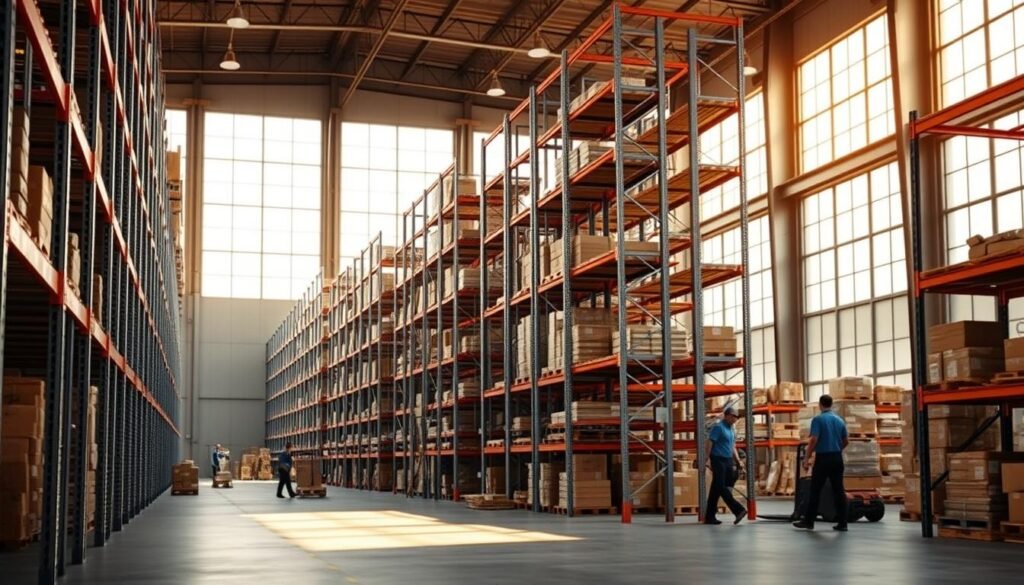
Vertical racking systems are a top pick for warehouses wanting to use more vertical space. Tall, narrow racks let warehouses store more without growing. They’re great for big or heavy items that don’t need to be grabbed often.
- Maximizes vertical space, increasing storage density
- Can be customized to fit specific warehouse dimensions
- Ideal for storing less frequently accessed items
Mobile Shelving Units
Mobile shelving units are another smart choice for saving space. These units slide along tracks, creating aisles only when needed. This saves space and makes it easier to find what you need.
- Reduces the number of aisles needed, saving floor space
- Enhances security by limiting access to aisles when not in use
- Can be integrated with existing shelving systems
Using these new storage solutions can greatly improve warehouse efficiency. Whether it’s vertical racking or mobile shelving, the goal is to store more while keeping things organized and easy to find.
The Role of Technology in Storage Solutions
Modern warehouses use technology to make the most of their space and improve how they work. New technologies help manage inventory better, making operations more efficient and cheaper.
Warehouse management software is a key technology. It helps track inventory, manage orders, and arrange storage better. This software makes warehouses work better and cuts down on mistakes. For example, it finds the best places to store items that are used a lot.
Warehouse Management Software
Warehouse management software gives real-time updates on inventory and operations. This helps businesses make smart choices about managing inventory and storage. It has features like:
- Inventory tracking and management
- Order management and fulfillment
- Automated reporting and analytics
- Integration with other business systems
These features help warehouses run better and make customers happier. For instance, a business can see trends in inventory and change its storage plans.
Automated Storage and Retrieval Systems
Automated storage and retrieval systems (AS/RS) are also important. They use machines to store and get items, cutting down on manual work and boosting efficiency. AS/RS is great for places where there’s a lot of storage, helping use space better.
AS/RS offers many benefits, like:
| Benefit | Description |
|---|---|
| Increased Efficiency | AS/RS makes storing and getting items much faster. |
| Improved Accuracy | Automated systems are less likely to make mistakes, making things more accurate. |
| Reduced Labor Costs | Automating storage and retrieval lowers labor costs. |
For businesses wanting to improve their storage, using technology like warehouse management software and AS/RS is key. This can lead to big improvements in how well things work and save money. For more info on improving warehouse storage, check out Top Racks Direct, a top provider of warehouse racking solutions.
How to Assess Your Warehouse Space Needs
Figuring out what your warehouse needs is crucial. You must look at your current stock and space. This helps you find the best storage solutions for your warehouse.
Evaluating Current Inventory
First, understand how much stuff you have. Count the items and know their size, weight, and storage needs. Accurate inventory data is key for smart storage choices.
Doing a deep dive into your inventory can show ways to improve. You might find ways to group similar items or get rid of old stock. This helps you maximize your warehouse storage capacity and cut down on waste.
| Inventory Category | Quantity | Storage Requirements |
|---|---|---|
| Fast-Moving Items | 1000 units | High-access shelving |
| Slow-Moving Items | 500 units | Standard shelving |
| Heavy Items | 200 units | Reinforced shelving |
Identifying Available Space
After knowing your inventory, look at your warehouse’s space. This includes floor space, vertical space, and any unused areas for storage.
Using vertical racking systems or mobile shelving units can greatly increase storage without needing more space. Also, make sure aisle space is good for moving items around efficiently.
To get the most out of your warehouse space, try these:
- Optimize your shelving and racking systems.
- Use a warehouse management system to keep track of stock.
- Keep checking and tweaking your storage setup.
Implementing Space-Efficient Strategies
Using space-efficient strategies in your warehouse can save a lot of money and boost productivity. By improving your warehouse layout and using the right equipment, you can work more efficiently.
Rethinking Layout and Design
A well-designed warehouse layout is key to using space well. You need to check your current inventory and see where you can add more space. By changing your warehouse layout, you can make picking items faster and work more efficiently.
Efficient warehouse shelving systems are important for storing more items. Using vertical space and modular shelving lets you store more while keeping the floor free for other tasks.
| Layout Considerations | Benefits |
|---|---|
| Vertical shelving | Increased storage density |
| Modular design | Flexibility for future changes |
| Optimized aisle widths | Improved navigation and safety |
Incorporating Multi-Functional Equipment
Adding multi-functional equipment can also make your warehouse more efficient. This includes things like mobile shelving units that can move to free up space when needed.
Using warehouse management software is another way to use space better. It helps track inventory and monitor warehouse activities, helping you make smart decisions about layout and equipment.
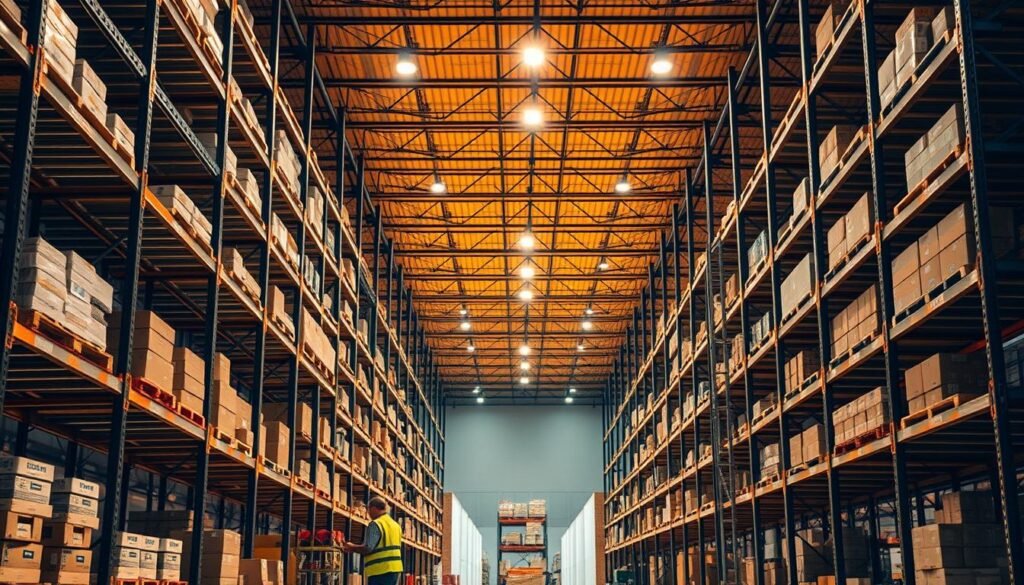
By using these space-saving strategies, you can make your warehouse more productive and cost-effective. Whether you’re updating your current warehouse or building a new one, these tips can help you reach your goals.
Best Practices for Maintaining Space-Efficiency
Keeping warehouses space-efficient is an ongoing task. It needs constant checks and tweaks to storage setups. By following best practices, warehouses can stay efficient, helping them run better.
Regular Audits and Inventory Checks
Regular audits and inventory checks are key. They spot unused space, find missing items, and make sure storage is used right. A regular check-up schedule can really boost warehouse work.
Benefits of Regular Audits:
- Identify and eliminate unnecessary inventory
- Optimize storage capacity
- Improve inventory accuracy
Let’s look at how regular audits help:
| Audit Frequency | Inventory Accuracy | Storage Capacity Utilization |
|---|---|---|
| Monthly | 95% | 85% |
| Quarterly | 90% | 80% |
| Annually | 85% | 75% |
Employee Training Programs
Training employees is crucial for space-efficient storage. They need to know how to use warehouse software and handle inventory. They also need to know how to use automated systems.
Key components of effective employee training programs include:
- Comprehensive onboarding for new employees
- Regular refresher courses on warehouse operations
- Training on new equipment and technology
By following these best practices, warehouses can stay efficient. This leads to better performance and cost savings. Regular audits and training are key to keeping warehouses efficient.
Case Studies of Successful Implementations
Looking at real-world examples, we see how optimized warehouse storage can help. It changes how businesses work, making them more efficient and saving money.
Examples from Large Retailers
Big retailers lead in using smart storage solutions. For example, a top retailer used vertical racks to boost storage by 30%. This helped them manage stock better, leading to faster orders and happier customers.
“The new storage system has been a game-changer. We’ve cut costs and improved efficiency.” –
A global e-commerce giant also made a big change. They got an automated storage system. This tech improved their layout, cut labor costs, and made inventory more accurate. It helped them get items fast, making orders smoother.
| Company | Solution Implemented | Outcome |
|---|---|---|
| Leading Retail Chain | Vertical Racking System | 30% increase in storage capacity |
| Global E-commerce Company | Automated Storage and Retrieval System | Reduced labor costs and improved inventory accuracy |
Insights from Small Businesses
Small businesses also see big gains from smart storage. A small maker used mobile shelving to use space better. This let them store more in less space, improving their stock management.
A small distributor used a warehouse management software. This tool tracked inventory live, helping them decide on stock levels and storage needs.
- Increased storage capacity
- Improved inventory management
- Enhanced operational efficiency
These stories show how smart storage can help any business. The right strategies and tech can make a big difference in warehouse operations.
Common Mistakes to Avoid in Warehouse Storage
To get the most out of warehouse space, businesses need to know what to avoid. Good warehouse storage is about more than just using every inch. It’s also about keeping things safe, growing with your business, and working well.
Overlooking Safety Regulations
Many warehouses forget about safety rules. Following these rules is key to avoiding accidents and keeping workers safe. This means training staff well, keeping equipment in good shape, and following storage rules.
Key safety considerations include:
- Proper labeling and signage
- Regular safety audits
- Employee training programs
Neglecting Scalability
Ignoring the need for growth is another big mistake. As a business gets bigger, it needs more space. Not planning for this can cause problems and extra costs later on. It’s important to pick storage solutions that can grow with your business.
Scalable storage solutions involve:
- Modular storage systems
- Flexible shelving units
- Technology integration for better inventory management
By steering clear of these errors, warehouses can make their storage better. They’ll be efficient, safe, and ready for the future.
Future Trends in Warehouse Storage Solutions
The future of warehouse storage is changing fast. New trends and technologies are coming to help warehouses store more and work better. It’s key to keep up with these changes.
Eco-Friendly Storage Solutions
Warehouses are now focusing on being green. They’re using less energy, recycling more, and throwing away less. This helps the planet and saves money.
Advancements in Storage Technology
New storage tech, like automated systems, is making warehouses more efficient. These systems help warehouses store more, work faster, and be more productive.
By adopting these trends, warehouses can thrive. They’ll make more money and stay ahead in a fast-changing world.