

Maximizing storage space is crucial for efficiency and productivity in any storage facility. Effective storage is key to streamlining operations and reducing costs. One of the most effective ways to achieve this is by implementing the right storage systems.
With the right warehouse shelving, businesses can significantly enhance their storage capacity. This not only helps in organizing inventory but also in retrieving items quickly, thus improving overall productivity.
Key Takeaways
- Maximizing storage space is crucial for efficiency and productivity.
- Effective warehouse shelving solutions can significantly enhance storage capacity.
- Proper storage systems help in organizing inventory and improving retrieval times.
- Implementing the right storage solutions can lead to cost savings.
- Efficient storage systems are essential for streamlining operations.
Understanding Warehouse Shelving Solutions
Warehouse shelving solutions are designed to maximize storage space and streamline inventory management. These systems are crucial for businesses looking to optimize their warehouse operations.
What Are Warehouse Shelving Solutions?
Warehouse shelving solutions refer to the various systems and structures used to store products and materials within a warehouse. These solutions can range from simple shelving units to complex, automated storage and retrieval systems.
The primary goal of these solutions is to provide efficient and safe storage, making it easier for businesses to manage their inventory and fulfill orders promptly.
Importance of Efficient Storage
Efficient storage is vital for reducing operational costs and improving productivity. By maximizing the use of available space, businesses can store more products, reduce clutter, and improve inventory management.
Key benefits of efficient storage include:
- Increased storage capacity
- Improved inventory accuracy
- Enhanced safety
- Better organization
Key Features to Look For
When selecting a warehouse shelving solution, there are several key features to consider. These include the type of products being stored, the available space, and the weight capacity required.
Some important features to look for include:
- Adjustability: Shelving systems that can be adjusted to accommodate different sizes of products.
- Durability: High-quality materials that can withstand heavy use.
- Safety features: Such as guard rails and secure anchoring to prevent accidents.
By understanding these aspects, businesses can make informed decisions when choosing a shelving system that meets their needs.
Types of Warehouse Shelving
Optimizing warehouse storage begins with understanding the diverse range of shelving solutions available. Warehouse shelving is not a one-size-fits-all solution; different types cater to various needs, from storage capacity to accessibility.
Selective Pallet Racking
Selective pallet racking is one of the most common and versatile storage solutions. It allows for easy access to any pallet, making it ideal for warehouses with a wide variety of products. This system is highly adaptable, with the ability to be configured to fit specific storage needs.
Key benefits include:
- High storage capacity
- Easy accessibility to all stored items
- Flexibility in configuration
Drive-In and Drive-Through Racks
Drive-in and drive-through racks are designed for high-density storage, particularly useful for storing large quantities of the same product. These systems allow forklifts to drive into the rack structure to retrieve pallets, maximizing storage density.
Advantages include:
- High-density storage capability
- Efficient use of space
- Suitable for large inventory of similar items
Cantilever Racking Systems
Cantilever racking systems are ideal for storing long, heavy, or irregularly shaped items such as lumber, pipes, or furniture. These systems feature arms that extend from a central column, providing unobstructed storage for long items.
The main advantages are:
- Ideal for storing long or irregular items
- Unobstructed access to stored items
- Adjustable arms to accommodate different lengths
Mezzanine Flooring
Mezzanine flooring is a cost-effective way to increase storage space without expanding the warehouse footprint. It involves constructing an intermediate floor between the main floor and the ceiling, providing additional storage or workspace.
Benefits of mezzanine flooring include:
- Maximizes vertical space
- Flexible use for storage or work areas
- Can be customized to fit specific needs
Benefits of Custom Shelving Solutions
By adopting custom shelving solutions, warehouses can experience a transformative shift in how they manage their storage. Custom shelving is designed to optimize the use of available space, ensuring that every inch of the warehouse is utilized effectively.
Tailored to Your Space
One of the primary benefits of custom shelving units is that they can be tailored to fit the unique dimensions and layout of your warehouse. This means that you can maximize your storage capacity without having to compromise on accessibility or safety.
Improved Organization
Custom shelving solutions also play a crucial role in improving warehouse organization. By having shelving that is designed to categorize and separate different types of inventory, you can significantly reduce clutter and make it easier for staff to locate the products they need.
This not only enhances operational efficiency but also reduces the risk of errors that can occur when inventory is disorganized. With commercial shelving units, you can create a system that is both logical and easy to navigate.
Increased Accessibility
Another significant advantage of custom shelving is that it can be designed to improve accessibility to stored items. By configuring shelving to fit your specific needs, you can ensure that frequently accessed items are stored in easy-to-reach locations, reducing the need for ladders or forklifts.
This not only improves efficiency but also enhances safety within the warehouse. With warehouse organization solutions, you can create a storage system that is both safe and efficient.
Factors to Consider When Choosing Shelving
Choosing the appropriate shelving for your warehouse involves careful consideration of several key factors. The right shelving solution can significantly enhance your warehouse’s efficiency and safety.
Weight Capacity
One of the most critical factors is the weight capacity of the shelving. It’s essential to choose shelving that can support the weight of the items you plan to store. Overloading shelving can lead to structural failures and accidents. When assessing weight capacity, consider the maximum weight of your heaviest items and ensure the shelving is rated for that load.
For instance, if you’re storing heavy machinery or bulk goods, you’ll need shelving with a high weight capacity. On the other hand, if you’re storing lighter items, you may have more flexibility in your shelving choices.
Material Options
The material of your shelving is another crucial consideration. Common materials include steel, aluminum, and wood, each with its pros and cons.
- Steel is durable and can support heavy loads, making it ideal for industrial warehouse shelves.
- Aluminum is lighter and resistant to corrosion, suitable for environments where moisture is a concern.
- Wood is aesthetically pleasing and can be used in retail settings, but it may not be as durable as metal options.
When choosing the material, consider the environment of your warehouse, the type of items you’re storing, and your budget.
Layout and Design
The layout and design of your shelving are vital for maximizing space and efficiency. Consider the flow of your warehouse operations and how items will be accessed.
A well-designed shelving system can improve inventory management and reduce the time it takes to retrieve items. It’s also important to consider the future needs of your warehouse and choose a design that can adapt to changes.
| Material | Weight Capacity | Durability |
|---|---|---|
| Steel | High | High |
| Aluminum | Medium | Medium |
| Wood | Low-Medium | Low-Medium |
By carefully considering these factors, you can select a shelving solution that meets your warehouse’s specific needs, enhancing both efficiency and safety. Partnering with reliable warehouse shelving suppliers can also ensure that you get high-quality shelving that is tailored to your requirements.
The Role of Industrial Shelving
Industrial shelving systems are designed to meet the demanding needs of warehouses, providing durable and flexible storage options. These systems are crucial for maximizing storage capacity and ensuring that warehouse operations run smoothly.
Heavy-Duty Options for Bulk Storage
One of the primary benefits of industrial shelving is its ability to handle heavy-duty storage needs. Selective pallet racking and drive-in racking are examples of systems designed for bulk storage, allowing warehouses to store large quantities of goods efficiently.
The table below highlights the key differences between selective pallet racking and drive-in racking:
| Feature | Selective Pallet Racking | Drive-In Racking |
|---|---|---|
| Accessibility | Easy access to all pallets | Access from one side only |
| Storage Density | Lower storage density | Higher storage density |
| Cost | Generally lower cost | Higher cost due to complexity |
Safety Features in Industrial Shelving
Safety is a paramount concern in warehouse operations, and industrial shelving is designed with several safety features to mitigate risks. These include sturdy construction, anti-collapse systems, and protective barriers to prevent accidents.
- Regular inspections to ensure structural integrity
- Proper training for employees on shelving usage
- Clear labeling and signage to indicate weight capacities
Versatility Across Industries
Industrial shelving is not limited to a single industry; it is versatile and can be adapted to various sectors, including retail, manufacturing, and logistics. The flexibility of industrial shelving systems allows businesses to tailor their storage solutions to their specific needs.
For instance, cantilever racking is particularly useful in industries that store long, heavy items such as lumber or pipes. Mezzanine flooring, on the other hand, is ideal for creating additional storage or working space within a warehouse.
Tips for Maximizing Your Shelving Space
To optimize your storage capacity, it’s essential to implement effective shelving strategies. Maximizing your warehouse shelving space can lead to more efficient operations and significant cost savings. By understanding the best practices for shelving, you can enhance your warehouse’s productivity and organization.
Vertical vs. Horizontal Storage
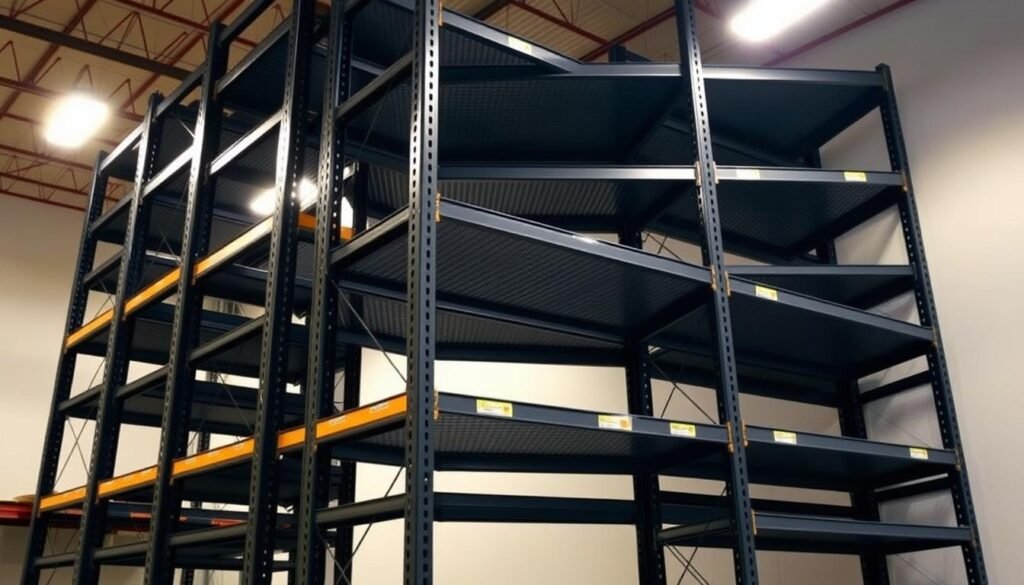
When it comes to maximizing shelving space, the debate between vertical and horizontal storage is ongoing. Vertical storage solutions, such as tall shelving units, can significantly increase storage capacity by making use of the warehouse’s vertical space. On the other hand, horizontal storage is beneficial for easy access to frequently used items.
A balanced approach that considers both vertical and horizontal storage needs can lead to an optimized storage system. For instance, using vertical storage for less frequently accessed items and horizontal storage for items that require quick access.
Utilizing Empty Spaces
Warehouse organization solutions often involve identifying and utilizing empty or underused spaces. This can include areas above or below existing shelving, or even corners that are typically hard to reach. By utilizing these spaces, you can further maximize your storage capacity.
For example, installing cantilever racks can help store items that are difficult to place on traditional shelving, such as long or irregularly shaped items. Similarly, mezzanine floors can be used to create additional storage or workspace.
Regular Maintenance and Reassessment
Regular maintenance and reassessment of your shelving systems are crucial for ensuring they remain effective and safe. This includes checking for damage, wear, and tear, and making adjustments as needed.
| Maintenance Task | Frequency | Importance |
|---|---|---|
| Inspecting shelving for damage | Monthly | High |
| Cleaning shelving units | Quarterly | Medium |
| Reassessing storage needs | Annually | High |
By implementing these strategies and maintaining your shelving systems, you can ensure your warehouse remains organized and efficient, ultimately leading to improved productivity and reduced costs.
Safety Regulations and Standards
Warehouse safety regulations and standards are not just recommendations; they are essential guidelines for a secure working environment. Ensuring compliance with these regulations is crucial for preventing accidents and maintaining operational efficiency.
OSHA Guidelines for Warehouse Shelving
The Occupational Safety and Health Administration (OSHA) provides comprehensive guidelines for warehouse shelving to ensure a safe working environment. These guidelines include specifications for the design, installation, and maintenance of shelving systems. For instance, OSHA emphasizes the importance of proper training for employees who work with or around shelving systems. As OSHA standards are designed to protect workers, adhering to these guidelines is not just about compliance; it’s about safeguarding the well-being of your team.
“The safety of our workers is paramount. We adhere strictly to OSHA guidelines to ensure our warehouse operations are safe and efficient.”
Ensuring Structural Integrity
The structural integrity of warehouse shelving is critical to preventing accidents such as collapses. Ensuring that shelving units are designed and installed to withstand the weight they are intended to hold is fundamental. Regular checks should be conducted to identify any signs of damage or wear, such as bent frames or corroded components. Using high-quality materials and robust construction methods can significantly enhance the structural integrity of shelving systems.
Importance of Regular Inspections
Regular inspections are vital for maintaining the safety and efficiency of warehouse shelving. These inspections help identify potential hazards before they become major issues. By routinely checking for damage, misalignment, or other signs of wear, warehouses can prevent accidents and reduce downtime. Implementing a regular inspection schedule is a proactive step towards maintaining a safe working environment.
In conclusion, adhering to safety regulations and standards is crucial for warehouses. By following OSHA guidelines, ensuring the structural integrity of shelving, and conducting regular inspections, warehouses can significantly reduce the risk of accidents and create a safer working environment.
Incorporating Technology into Shelving Solutions
As warehouses evolve, incorporating technology into shelving systems has become a crucial step towards enhancing operational efficiency. The modern warehouse is no longer just a storage facility; it’s a dynamic hub that requires sophisticated management systems to optimize storage and retrieval processes.
Automated Storage and Retrieval Systems
Automated Storage and Retrieval Systems (AS/RS) are revolutionizing warehouse management by streamlining the storage and retrieval of goods. These systems utilize computer-controlled machinery to automatically place and retrieve items from specific storage locations, significantly reducing labor costs and increasing efficiency. For businesses looking to implement AS/RS, it’s essential to assess their storage needs and explore options available in the market, such as those offered by warehouse storage solutions.
Smart Shelving Solutions
Smart shelving solutions integrate technology into traditional shelving systems, enabling real-time monitoring and management of inventory. These systems can include sensors and RFID tags that track inventory levels, monitor product conditions, and provide alerts for low stock or potential issues. By adopting smart shelving, warehouses can improve inventory accuracy, reduce stockouts, and enhance overall operational efficiency.
Inventory Management Software
Effective inventory management is critical for warehouse operations, and technology plays a vital role in this aspect. Inventory management software allows businesses to track inventory levels, monitor product movement, and analyze storage capacity in real-time. By leveraging this software, warehouses can optimize their shelving solutions, streamline inventory processes, and make informed decisions about storage and distribution.
In conclusion, incorporating technology into shelving solutions is a forward-thinking approach that can significantly enhance warehouse operations. By adopting automated systems, smart shelving, and advanced inventory management software, businesses can improve efficiency, reduce costs, and stay competitive in a rapidly evolving market.
Cost Considerations for Shelving Solutions
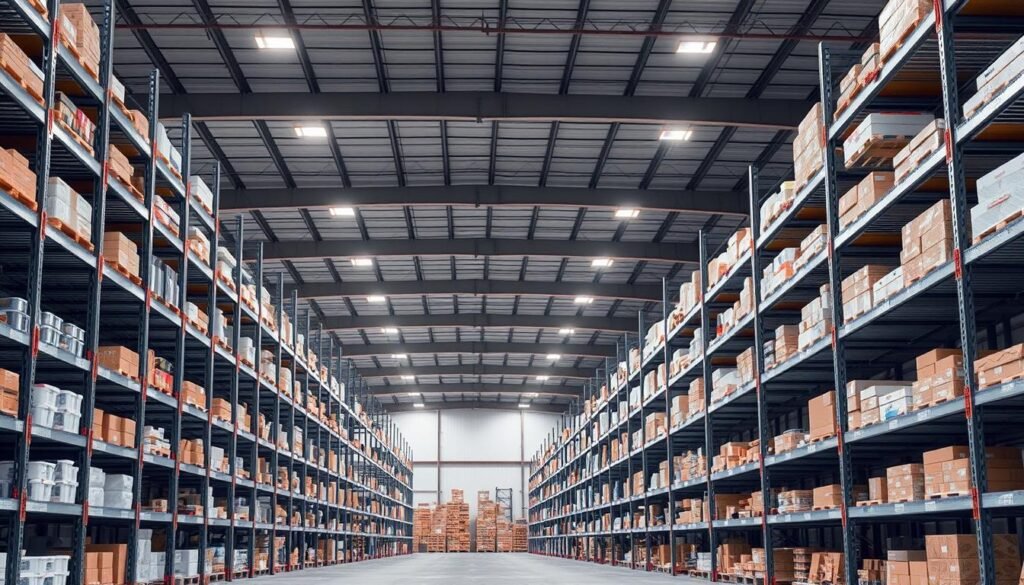
Cost considerations play a vital role in choosing industrial warehouse shelves that meet your storage needs. When selecting a shelving solution, it’s essential to balance the initial investment with the long-term benefits.
Budgeting for Your Storage Needs
To effectively budget for your storage needs, consider the following factors:
- The total storage capacity required
- The type of shelving that best suits your needs
- The material and quality of the shelving
- Any additional features, such as adjustability or mobility
By assessing these factors, you can determine the most cost-effective solution that meets your storage requirements.
Long-Term Investment vs. Short-Term Saving
While it might be tempting to opt for the cheapest shelving solution available, it’s crucial to consider the long-term implications of your choice. Investing in high-quality warehouse shelving suppliers can provide a better return on investment over time.
Some benefits of long-term investment include:
- Reduced maintenance and replacement costs
- Improved safety and reduced risk of accidents
- Increased efficiency and productivity
Return on Investment (ROI) Calculations
To calculate the ROI of your shelving solution, consider the following:
- The initial cost of the shelving
- The expected lifespan of the shelving
- Any cost savings or revenue increases resulting from the investment
By carefully evaluating these factors, you can make an informed decision about your shelving needs and ensure a positive return on investment.
Case Studies: Success Stories with Shelving Solutions
In this section, we delve into real-world examples of companies that have revolutionized their storage capabilities with innovative shelving solutions. By examining these case studies, we can gain insights into how different industries have benefited from tailored storage rack systems and warehouse organization solutions.
Retail Industry Examples
A leading retail chain implemented a custom shelving solution that increased their storage capacity by 30%. By utilizing selective pallet racking, they were able to store more products in the same floor space, improving their inventory management and reducing stockroom congestion.
Another retail success story involves a company that adopted cantilever racking systems for storing long, heavy items such as lumber and pipes. This not only improved safety but also made it easier for employees to access the products they needed, thus enhancing overall operational efficiency.
Manufacturing Successes
In the manufacturing sector, a company producing automotive parts saw a significant improvement in their production workflow after installing drive-in and drive-through racks. This allowed for denser storage of raw materials and finished goods, streamlining their production line and reducing handling times.
A furniture manufacturer benefited from implementing mezzanine flooring, effectively doubling their storage space without expanding their facility. This not only saved on real estate costs but also allowed for better organization of their inventory.
| Industry | Shelving Solution | Benefits |
|---|---|---|
| Retail | Selective Pallet Racking | Increased storage capacity, improved inventory management |
| Manufacturing | Drive-In and Drive-Through Racks | Denser storage, streamlined production workflow |
| Manufacturing | Mezzanine Flooring | Doubled storage space, reduced real estate costs |
Warehousing Transitions
A logistics company undergoing a warehousing transition found that implementing smart shelving solutions greatly enhanced their ability to track inventory in real-time. This technology integration allowed for more efficient order fulfillment and reduced errors.
Another warehousing success story involves a company that switched to automated storage and retrieval systems (AS/RS). This change significantly reduced labor costs and improved the accuracy of inventory tracking, leading to higher customer satisfaction.
By examining these case studies, it’s clear that effective shelving solutions can have a transformative impact on businesses across various industries. Whether through improved storage capacity, enhanced operational efficiency, or better inventory management, the right shelving system can drive significant benefits.
Common Mistakes to Avoid
Implementing effective shelving solutions requires more than just installing racks; it demands a thoughtful approach to avoid common mistakes. When designing and installing shelving systems, several critical factors must be considered to ensure both efficiency and safety.
Overlooking Weight Capacities
One of the most significant mistakes is overlooking the weight capacities of shelving units. Heavy duty shelving solutions are designed to handle substantial loads, but exceeding these limits can lead to catastrophic failures. It’s crucial to accurately assess the weight of the items to be stored and select shelving that meets or exceeds these requirements.
For instance, a warehouse storing heavy machinery parts needs to ensure that the shelving units are capable of handling the total weight of the inventory. Failure to do so can result in structural damage and potential safety hazards.
Ignoring Space Utilization
Effective space utilization is another critical aspect often overlooked. Commercial shelving units come in various configurations, and choosing the right one can significantly impact storage capacity. Ignoring the available space and the layout can lead to inefficiencies, making it difficult to access stored items or resulting in underutilized areas.
| Space Utilization Strategy | Benefits |
|---|---|
| Vertical Storage | Maximizes vertical space, increasing storage capacity |
| Adjustable Shelving | Allows for flexibility in storing items of varying sizes |
| Efficient Layout | Enhances accessibility and reduces retrieval times |
Neglecting Employee Safety
Employee safety is paramount in any warehouse environment. Neglecting safety protocols when installing and using shelving systems can lead to accidents and injuries. Ensuring that shelving units are securely anchored, and that employees are trained on safe practices for storing and retrieving items, is essential.
For example, implementing safety measures such as securing shelving units to walls and floors, and providing training on the safe use of heavy duty shelving solutions, can significantly reduce the risk of accidents.
Conclusion: Making the Right Choice
Choosing the right warehouse shelving solutions is crucial for maximizing storage space and improving operational efficiency. By understanding the different types of shelving available and considering factors such as weight capacity, material options, and layout design, businesses can make informed decisions that meet their specific needs.
Key Considerations for Effective Storage
Effective warehouse storage solutions require careful planning and consideration. Businesses should assess their storage needs, consider the benefits of custom shelving solutions, and ensure compliance with safety regulations and standards.
Seeking Professional Guidance
When it comes to implementing warehouse shelving solutions, seeking professional advice can be invaluable. Experts can help businesses navigate the complexities of warehouse storage, ensuring that their shelving solutions are both efficient and safe. By investing in the right warehouse shelving solutions, companies can enhance their warehouse storage solutions, improve productivity, and drive business success.